
Scuba Diving in Punta Cana: A Beginner's Complete Guide
Everything a first-time diver needs to know about scuba diving in Punta Cana — from Discover Scuba to Open Water certification, what to expect, what it costs, and how to choose the right operator.
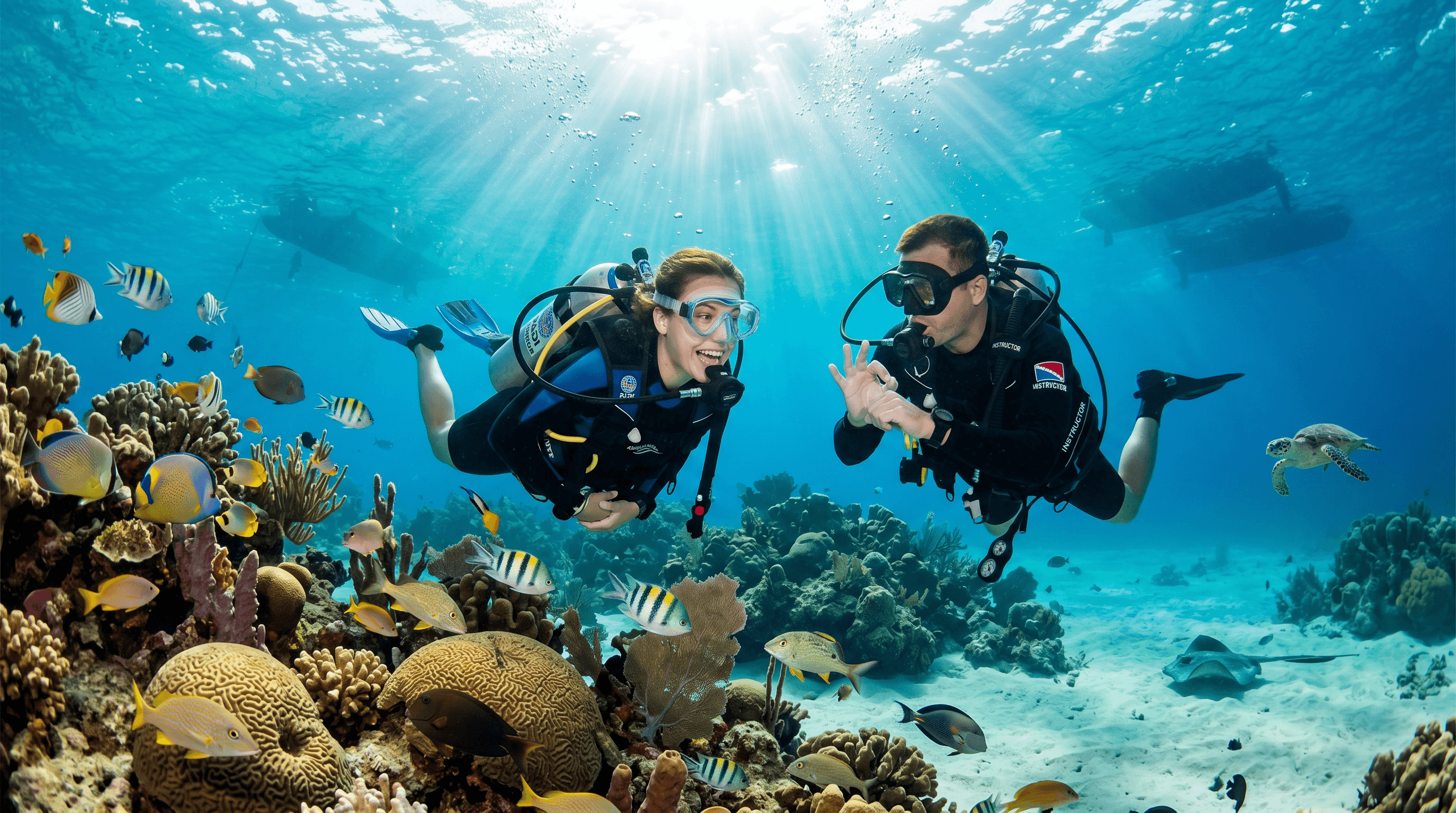
Punta Cana is one of the most beginner-friendly scuba diving destinations in the Caribbean — and we say that as a PADI-certified dive center that has been training first-time divers in these waters since the day we opened. The combination of warm year-round temperatures, calm protected reefs, excellent visibility, and a deep bench of bilingual instructors makes it possible to go from zero scuba experience to your first real ocean dive in a single morning.
This guide is written for the traveler who has never breathed underwater before — what to expect, what it costs, whether you need certification, what marine life you'll actually see, and how to choose a dive operator you can trust. Everything that follows reflects how we run things at Grand Bay of the Sea, our sister company and the dive operation behind every PADI program on this site.
Do I Need to Be Certified to Dive in Punta Cana?
No — and this is the single most common misconception we encounter. Through PADI's Discover Scuba Diving program, anyone aged 10 or older who is in reasonable health can experience scuba diving for the first time, without any certification, without any prior training, and without committing to a multi-day course. A certified PADI instructor introduces you to the basic skills in shallow water for about 30 to 45 minutes, then takes you on an actual reef dive at up to 12 meters (40 feet) depth.
This is not a watered-down experience. You're breathing from real scuba equipment, descending to real reef sites, seeing the same marine life that certified divers see. The only differences from a certified two-tank dive are the maximum depth, the duration of bottom time, and the instructor staying within arm's reach throughout. For someone curious about diving but not ready to invest in a full Open Water course, Discover Scuba is exactly the right entry point.
If you decide you love it (and most people do), the skills you practice during Discover Scuba can count toward the first day of a full PADI Open Water certification course if you continue within the next 12 months. So even the trial dive becomes part of your future certification.
What Does a Typical Discover Scuba Day Look Like?
Here's the honest, minute-by-minute breakdown of a Discover Scuba Diving morning with us. The whole experience runs about 4 to 5 hours from hotel pickup to drop-off, but the actual underwater time is the highlight you'll remember.
Hotel Pickup and Transfer (around 7:30 AM)
We pick you up from your hotel in Punta Cana, Bávaro, or Cap Cana. The drive to our dive center in Cabeza de Toro takes 20 to 40 minutes depending on your hotel location. We use the time on the road for introductions and to answer the questions you'll inevitably have.
Arrival and Briefing (around 8:30 AM)
At the dive center, your PADI instructor walks you through a non-technical 30-minute briefing covering how the equipment works, the four or five basic safety skills you'll practice, and what to expect underwater. There's no test, no academic content to memorize — just clear, practical guidance.
Equipment Fitting
You'll be fitted with a wetsuit (a thin 3mm shorty in summer, slightly thicker in winter), a mask, fins, a buoyancy control device, a regulator, and a tank. Total equipment weight on land is uncomfortable; underwater you're effectively weightless. Most guests are surprised how quickly the gear stops feeling cumbersome once you're in the water.
Confined Water Practice (around 9:30 AM)
We do the skills session in a shallow, calm area — typically chest-deep water just off the beach or in a controlled lagoon environment. You'll practice clearing water from your mask, retrieving your regulator if it falls out of your mouth, and equalizing the pressure in your ears as you descend. The whole thing takes about 30 minutes, and almost everyone gets it on the first try.
The Open Water Dive (around 10:30 AM)
This is the actual dive — what you came for. We take you to one of our regular reef sites where the depth is 6 to 12 meters, the visibility is typically 15 to 25 meters, and the marine life is dense. Your instructor stays right next to you, controls your descent, and signals everything you'll see. Most Discover Scuba dives last around 30 to 40 minutes of bottom time.
Return and Debrief
Back at the dive center we'll have water and a snack, review some photos your instructor likely took during the dive, and chat about whether you want to continue with an Open Water course on a future day. You'll be back at your hotel by lunchtime.
How Much Does Scuba Diving in Punta Cana Cost?
Pricing depends on whether you're certified or not, how many dives you do, and whether you book directly with the dive center or through a third-party tour desk. Current pricing for direct bookings with Grand Bay of the Sea:
- Discover Scuba Diving — from $100 USD per person, including all equipment, instruction, and one reef dive.
- Two-Tank Dive for Certified Divers — $125 USD per diver, includes two dives at different reef sites with full equipment.
- PADI Open Water Certification Course — typically three to four days of training, priced as a full package.
- Shark Diving Experience — for experienced certified divers wanting to encounter blacktip reef sharks in a controlled setting.
- Catalina Island Dive Trip — a full-day combined diving and beach excursion ideal for couples where one partner dives and the other snorkels.
What's almost always cheaper than booking through a resort's tour desk: booking directly through the dive center. Resorts typically add a 30 to 50 percent markup for the same dive. Send an email or use the contact form to confirm current pricing and availability.
What Marine Life Will I Actually See?
The reefs around Punta Cana sit at the western edge of the Atlantic Caribbean ecosystem, which means you get a mix of species. Here's what you can realistically expect on a typical morning dive at our regular sites:
Reef Fish (basically guaranteed)
Hundreds of species in the parrotfish, angelfish, grunt, snapper, and damselfish families. The colors are intense — neon yellows, deep purples, electric blues — and they're remarkably unbothered by divers. If you stay calm and move slowly, schools of yellowtail snapper will swim within touching distance.
Sea Turtles (likely)
Green sea turtles and hawksbill turtles are residents of the local reefs. Some of the bigger animals have been visiting the same coral heads for years and have become accustomed to divers. Encounters are calm and unhurried — they ignore you while they graze.
Rays (common)
Southern stingrays and spotted eagle rays patrol the sandy patches between coral heads. The eagle rays are the showpiece — wingspan up to two meters, dramatic spotted bodies — and they sometimes swim directly past divers without changing course.
Moray Eels (very common)
Green morays and spotted morays live in nearly every coral crevice. They look intimidating with their open mouths, but the open mouth is just how they breathe — they're pumping water across their gills. Approached calmly, they're entirely safe to observe at close range.
Nurse Sharks (often)
Nurse sharks are the gentlest of all reef sharks. They spend most of the day resting motionless under ledges. Spotting one is a highlight, and divers regularly photograph nurse sharks from a meter or two away without disturbing them.
Blacktip Reef Sharks (on specific trips)
If you want a real shark encounter, the Shark Diving Punta Cana experience is a separate dedicated trip designed for certified divers comfortable with controlled shark interactions. It's an exhilarating dive but not part of standard Discover Scuba programming.
When Is the Best Time of Year to Dive?
Punta Cana's underwater conditions are remarkably stable year-round. Water temperatures range from 26°C in January and February to about 29°C in August and September. Visibility averages 15 to 25 meters across the calendar, occasionally dropping after heavy rain.
April to June — The Sweet Spot
Calm seas, excellent visibility, warm water, and lower visitor numbers than peak winter. This is when we tell friends to visit if they have flexibility.
December to March — Peak Season, Slightly Cooler
Water drops to 26°C, which still feels warm but warrants a 3mm wetsuit. The trade winds blow stronger, occasionally making some boat rides bumpier, but dive sites remain calm because we're diving on the protected leeward side of the coast.
July to October — Warmest Water, Hurricane Watch
Water hits 29°C — bathwater warm. Visibility is generally excellent, but hurricane season runs from June through November and very rarely affects dive operations directly. If a storm threatens, we cancel and reschedule, with deposits fully refunded.
Common Worries About First-Time Diving
"What if I panic underwater?"
It happens occasionally, almost always in the first minute. The instructor expects it, has trained for it, and is right beside you. The most common response is to surface slowly, breathe, and re-attempt — and most people make it on the second try. Of all our Discover Scuba guests, the percentage who decide they don't want to continue is small. Anxiety usually fades within the first few minutes once your brain accepts that breathing through the regulator works.
"Will my ears hurt?"
Only if you forget to equalize. The pressure increase as you descend is exactly the same sensation as a plane landing, just slower. Pinch your nose and gently blow, or wiggle your jaw, every meter or so on the way down. The instructor will signal when to equalize until you have the rhythm.
"Do I need to swim well?"
Basic water comfort is required, but you don't need to be a strong swimmer. The buoyancy control device keeps you afloat at the surface, and underwater your fins do most of the work. If you can swim a leisurely 200 meters and tread water for 10 minutes, you have more than enough ability for Discover Scuba.
"Can I dive if I wear glasses or contacts?"
Yes to both. Contact lenses are fine — just keep your eyes closed if you need to clear your mask. For glasses-wearers, prescription dive masks are available; let us know your prescription a day in advance and we'll have one ready.
"What about medical conditions?"
PADI requires a brief medical questionnaire before any dive. Common conditions like controlled high blood pressure or mild asthma usually don't disqualify you, but anything heart-related, recent surgery, or significant respiratory issues may require a physician's clearance. If you're unsure, send us an email in advance and we'll let you know what's needed.
Should I Get Certified or Just Try Discover Scuba?
Honest answer: it depends on your travel schedule and your interest level. If you have one morning free during your trip and you're curious about diving, Discover Scuba is perfect — it's a single half-day, you experience the real thing, and you don't have to commit. If you have three or four full days and you're seriously considering diving in your life going forward, the PADI Open Water course gives you a globally recognized certification that lets you dive anywhere in the world for the rest of your life. Most travelers do Discover Scuba first and then return on a future trip — or a future day on the same trip — for the full course.
Combining Diving with Other Excursions
Diving pairs naturally with the rest of a Punta Cana itinerary because it's only a half-day commitment. A balanced week:
- Beach day to acclimate
- Discover Scuba morning (you'll be back at the hotel by lunch)
- Saona Island full-day tour
- Recovery beach day
- Catamaran cruise for sunset
- If you loved diving, return for a second dive or start your Open Water course
- Departure
Important rule: do not dive within 18 to 24 hours before flying. Nitrogen takes time to leave your bloodstream, and flying too soon can cause decompression sickness. Schedule diving early in your trip, not on the day before departure.
How to Choose a Dive Operator
Not every dive shop in Punta Cana operates at the same standard. Things to check before booking, anywhere:
- PADI, SSI, or NAUI certification — visible, current, verifiable.
- Instructor-to-student ratio for Discover Scuba should be 1:2 maximum, ideally 1:1.
- Equipment age and condition — regulators serviced annually, tanks within hydro-test date.
- Safety protocols — oxygen on board every boat, first-aid trained crew, clear emergency procedures.
- Bilingual instruction in your preferred language.
- Direct bookings with the dive center, not lobby-desk middlemen.
We tick all of these and have been operating in Cabeza de Toro for over a decade. If you have questions before booking, reach out to our team directly.
Diving Insurance and What Happens If Something Goes Wrong
Most reputable dive operators in Punta Cana carry liability insurance and have access to the nearest hyperbaric chamber, which is located in Santo Domingo about two hours away by ambulance. The closer chamber on the southeast coast covers most diving emergencies for the region. Statistically, scuba diving with a certified operator is safer than driving a car — but the rare incidents that do happen are serious enough that personal coverage matters.
Travel insurance from your home country may exclude scuba diving, so check the policy fine print. Specialist dive insurance through providers like DAN (Divers Alert Network) costs around $40 to $60 per year and covers recompression treatment, evacuation, and equipment damage. We strongly recommend it for anyone planning to dive more than once on the trip. For Discover Scuba participants doing a single shallow dive with constant instructor supervision, the risk profile is dramatically lower than for certified open-water diving, and most travelers are adequately covered by standard travel insurance — but verify before you book.
Diving as a Couple When Only One Partner Wants To
This is one of the most common situations we encounter. One partner is excited about trying scuba, the other isn't comfortable in deep water or simply isn't interested. The solution we developed for these couples is the Catalina Island combined trip — the certified or Discover Scuba partner dives at one of the island's reef sites while the non-diving partner snorkels in the same shallow waters with a snorkel guide, then both partners reunite on the beach for lunch and the catamaran ride back.
The non-diving partner gets a beautiful beach day with snorkeling, the diving partner gets a proper reef dive, and neither has to compromise. We've run this trip hundreds of times for honeymooners and anniversary couples — it's consistently one of the most positively reviewed days we offer.
Ready to Try Diving?
Punta Cana is genuinely one of the best places in the world to take your first breath underwater. The conditions are forgiving, the marine life rewards even a short dive, and the cost of trying is low enough that there's no real reason not to. Book a Discover Scuba Diving experience for any morning of your trip, or contact us with your dates and group size. We'll get back to you with availability within a few hours, and we'll match you with an instructor who fits your comfort level and language preference. The first dive of your life is a small decision with an outsized payoff — most people who try it remember the experience years later as one of the highlights of their entire trip.