
What to Pack for Punta Cana: The Complete Checklist
A practical, no-nonsense packing guide for Punta Cana written by people who live here — what to bring, what to leave home, and what you can buy locally if you forget something important.
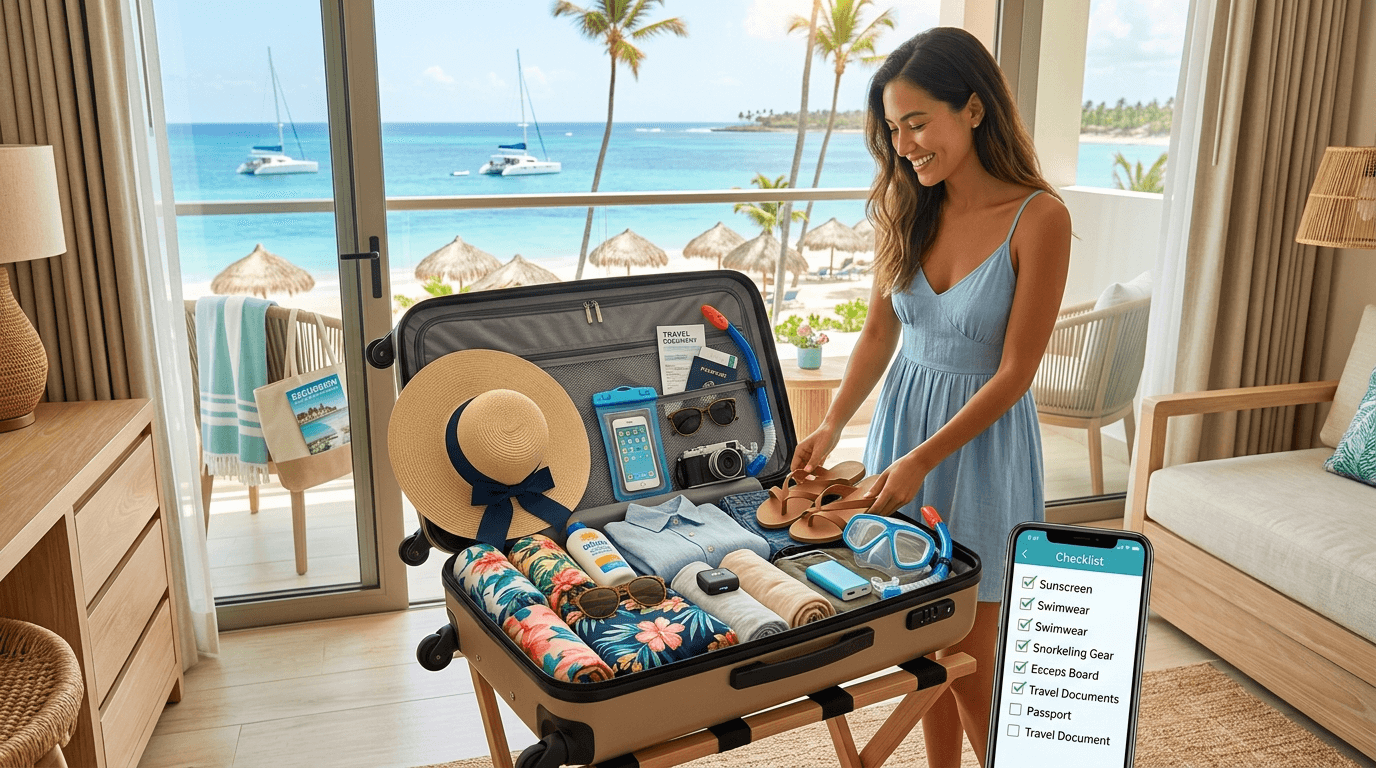
Packing for Punta Cana is mostly about restraint. The climate is forgiving — warm and dry most of the year — and resort culture is relaxed, which means you genuinely don't need much. The mistakes we see travelers make almost always come from overpacking formal wear or under-packing the small practical items that turn out to matter most. After years of helping guests prepare for excursions here, we know the questions that come up and the items people regret leaving behind.
This guide covers what to bring, what to leave at home, what's worth buying ahead, and what's available locally if you forget. It's organized by category so you can scan to your specific concerns. If you already know which excursions you'll be doing, you can also check our full excursions list for specific gear requirements.
Clothing: Less Than You Think
A reasonable rule for a one-week Punta Cana trip is two to three swimsuits, four to five casual outfits, one slightly nicer outfit for evening dinners at a la carte restaurants, and one set of clothes for the flight back. That's it. Resort wear is universally casual — shorts, t-shirts, sandals, and sundresses cover 95 percent of situations. Even most a la carte restaurants at all-inclusive resorts require only "smart casual" — long pants for men, a sundress or skirt for women.
What to Bring
Lightweight, breathable fabrics work best. Cotton, linen, and moisture-wicking synthetic blends all perform well. Avoid heavy denim and tight synthetic fabrics that don't breathe in humidity. Two swimsuits is the minimum because one will inevitably be damp when you want to swim again; three is comfortable. Pack one rashguard or UV-protective swim shirt — you'll want it for snorkeling, Saona Island, and any extended water time.
What to Leave Home
Heavy clothing of any kind, formal wear (you won't need it), bulky hoodies, jeans, suits, and most jewelry. Punta Cana resorts are very casual; men can wear shorts to dinner at most buffets, and women rarely dress up beyond a sundress. Anything that takes up significant suitcase space without earning its place should stay home.
Footwear: Three Pairs Maximum
You realistically need three types of footwear for a Punta Cana trip:
- Flip-flops or beach sandals — for the pool, beach, and walking around the resort. Pack two pairs if you tend to lose one.
- Closed-toe walking shoes — for excursions, day trips to Santo Domingo, and anywhere with uneven terrain. Lightweight sneakers or trail sandals work well.
- Water shoes — optional but recommended for snorkeling, rocky beaches, and the Hoyo Azul cenote if you're visiting Scape Park. Cheap rubber water shoes are fine.
Skip dress shoes and heels — there's nowhere they'd be useful. The single biggest packing-space win is leaving these home.
Sun Protection: The One Category You Can't Skimp On
Punta Cana's UV index is intense — among the highest you'll encounter at any popular tourist destination. Sun protection isn't optional, and what you bring matters more than most travelers realize.
- Reef-safe sunscreen, SPF 30 or higher — bring at least one full bottle per person for a week. Local sunscreen is available but expensive and often not reef-safe.
- A wide-brimmed hat or baseball cap — essential, particularly for excursion days. The sun on a boat is relentless.
- Polarized sunglasses — non-polarized lenses don't cut the glare off the water. If you only bring one accessory, make it these.
- A rashguard or UV-protective shirt — covers more skin than sunscreen can protect, particularly during long snorkeling sessions.
- Aloe vera gel — bring a small bottle. Even careful travelers can get a touch too much sun, and aloe is the fastest relief.
What counts as reef-safe: sunscreens without oxybenzone, octinoxate, octocrylene, and a few other ingredients linked to coral damage. Many Caribbean parks now require reef-safe formulations, and our excursions specifically request them.
Excursion-Specific Items
For Saona Island and Beach Boat Trips
If you're booking the Saona Island day trip or any catamaran excursion, you'll want a few specific items: a waterproof phone pouch (we have them on our boats but pack your own as backup), a quick-dry travel towel (most operators provide larger ones, but a smaller personal one is convenient), and a sturdy waterproof bag for storing your phone, hotel key card, and a small amount of cash during the day.
For Scuba Diving
If you're certified and plan to dive, bring your certification card and dive log. Most operators including Grand Bay of the Sea rent all equipment, so you don't need to bring tanks, regulators, or BCDs. Some certified divers prefer to bring their own masks for comfort — that's worthwhile if you have a fitted mask, otherwise rental gear is reliable. For Discover Scuba participants, all gear is provided.
For Buggy and ATV Tours
Adventure tours like buggies and zip-lines get dusty and dirty. Pack clothes you don't mind ruining, closed-toe shoes you don't care about, a bandana or buff to cover your face from dust, and a pair of cheap sunglasses (the dust on goggles is a nuisance). Long sleeves help on these tours despite the heat.
For Cultural Day Trips
If you're heading to Santo Domingo, the Higüey basilica, or other cultural sites, dress slightly more conservatively. Shoulders covered, no swimwear visible, comfortable walking shoes. The historic Colonial Zone in Santo Domingo involves a lot of walking on cobblestones — flip-flops are a poor choice.
Tech and Electronics
What's worth bringing:
- Phone with international plan or local SIM — most travelers find their home plan adequate for basic communication. Dominican SIMs are cheap if you need data-heavy use.
- Portable charger — long excursion days drain phones quickly, and resort bus pickups are early.
- Universal adapter — the Dominican Republic uses North American Type A and Type B plugs (110V), which means travelers from outside North America need adapters. North Americans can use plugs as-is.
- Headphones — for long flights and beach lounging.
- E-reader or downloaded entertainment — Wi-Fi at resorts is generally adequate but inconsistent in some rooms. Don't count on streaming.
What to leave home: laptops (unless you must work), expensive cameras (phone cameras are excellent and a backup waterproof phone case protects them), multiple chargers for devices you won't use. The fewer cables in your bag, the better.
Health, Medication, and Toiletries
Resort pharmacies are limited and often expensive. Bring a small kit:
- Any prescription medications in original containers, with enough for the entire trip plus 2-3 days extra for delays
- Pain reliever (ibuprofen or acetaminophen) — useful for sunburn discomfort and the occasional too-much-rum headache
- Anti-diarrheal medication — most travelers don't need it, but having it available is reassuring
- Motion sickness tablets if you're prone — useful for boat days
- Insect repellent with DEET or picaridin — for evenings, jungle excursions, and the wet season
- Hand sanitizer — small bottle for between meals and after handling cash
- Band-aids and basic first-aid for small cuts from coral or beach shells
Resort toiletries (shampoo, conditioner, body wash) are universally adequate. You don't need to pack full-size bottles unless you have specific preferences.
Documents and Money
What's required: a passport valid for at least six months past your travel date, your flight confirmation, hotel confirmation, and proof of any excursion bookings. The Dominican Republic uses a digital tourist card system that's filled out online before arrival or at the airport — confirm the current requirements at the time of booking.
Money matters: US dollars are accepted at most tourist-facing businesses and many resort bars. The Dominican peso is the local currency and is what you'll receive as change. Credit cards work at resorts and larger restaurants but may not be accepted at small vendors or for tips. Bring a mix of small bills ($1, $5, $10) for tips and souvenirs — total $100 to $200 USD in small bills is plenty for a week of casual tipping. ATMs are available at the airport and major resort areas and dispense Dominican pesos, sometimes with the option of US dollars.
What NOT to Pack
Save space and weight by leaving these home:
- Beach towels — every resort provides them. Bringing your own is redundant.
- Hair dryers — every hotel room has one.
- Heavy books — your e-reader or phone is lighter.
- Multiple pairs of dress shoes — you genuinely won't use them.
- Expensive jewelry — wear simple pieces; leave expensive items home.
- Drone equipment — drone use at resorts and many beaches is restricted, and certain areas including national parks prohibit them entirely.
- Large amounts of cash — credit cards plus a few hundred in small bills covers most situations.
Seasonal Packing Adjustments
Punta Cana's climate is consistent enough that core packing doesn't change dramatically with the seasons, but a few items shift depending on when you travel.
December through March (Dry Season, Cooler Evenings)
Pack one lightweight long-sleeve shirt or sweater for evening dinners and morning boat departures. Temperatures occasionally drop into the low 20s°C on January and February evenings, especially when the trade winds are strong. You won't need anything heavier than a long-sleeve cotton shirt, but bare arms in 21°C on a windy boat feel cold quickly. A 3mm wetsuit shorty is worth renting (not bringing) for diving in January and February when water temperatures dip to 26°C.
April through June (Warming Up, Mostly Dry)
Standard tropical packing without modifications. The long-sleeve shirt becomes unnecessary, and even mornings on the boat are warm. This is the easiest season to pack for — light fabrics in all categories, minimal extras.
July through October (Hot, Humid, Wet Season)
Add a small compact rain jacket or poncho — not for the resort (where rain is brief), but for excursions to outdoor sites like Altos de Chavón or Santo Domingo's colonial zone. Pack extra reef-safe sunscreen because you'll need more daily. Insect repellent becomes more important in the wet season; pack a small bottle. Lightweight, fast-drying fabrics matter more during these humid months — anything cotton-heavy stays damp for hours after a sudden shower.
November and Early December (Transition to Dry)
Similar to April through June but with the same lightweight long-sleeve as a precaution for the rare cooler evening. Rain risk is low after the first week of November.
Packing for Families with Kids
Traveling with children changes the equation. The core packing list still applies, but several additional categories matter:
- Reef-safe sunscreen formulated for kids — children's skin burns much faster than adults' under the Caribbean sun. Pack more than you think you need.
- Swim diapers if applicable — many resort pools require them, and they're hard to find locally.
- A favorite stuffed animal or comfort item — long flights and unfamiliar rooms are easier with something familiar.
- Small snacks for travel days — peanut butter packets, crackers, anything that survives transit. Resort food is plentiful but travel hours are long.
- Children's pain reliever — sized and dosed correctly for your child's weight.
- A small inflatable beach toy or two — entertaining kids on the beach for hours costs about $5 in packing space.
- Hats with neck protection — adult-style baseball caps don't protect ears and necks well; legionnaire-style hats work much better for kids.
For families considering family-focused excursions, we often suggest the catamaran-only version of Saona for kids under five — it's gentler than the speedboat option and the day flows better for younger children.
Things You Can Buy Locally (and Where)
If you forget something or run out, most basics are available locally, though prices vary widely. Knowing what's easy to find and what isn't can save you suitcase space.
Easy to Find Near Resorts
Sunscreen (though often not reef-safe), aloe vera, snacks, basic over-the-counter medications, sunglasses, beach toys, and souvenir clothing. The resort shop and small markets near major resort zones cover these. Expect to pay 30 to 50 percent more than US retail prices for imported items.
Harder to Find or Expensive
Specialty contact lens solution, specific prescription medications, expensive electronics, prescription-grade reef-safe sunscreen, kid-sized swim diapers, and specialty baby formula. Bring these from home.
Available But Not in Resort Areas
Larger pharmacies, supermarkets, and shops are 20 to 30 minutes by car from most resort zones — in nearby towns like Bávaro, Veron, and Higüey. A taxi for a 30-minute round trip costs $30 to $50 USD. Worth doing only if you really need something the resort shop doesn't carry.
Resort vs Excursion Day Packing
Once you're at the resort, you'll use very little of what you packed on any given day. A typical excursion day requires only a small daypack: swimsuit under your clothes, a change of dry clothes for the return, sunscreen, hat, sunglasses, waterproof phone case, hotel key, small amount of cash, and a water bottle. The rest of your luggage stays in the room.
If you're doing a multi-stop trip like a full-day Saona excursion and a separate day trip to Santo Domingo, your daypack content shifts — Saona needs water gear, Santo Domingo needs slightly nicer clothes and walking shoes. Plan each excursion day separately rather than carrying everything you might need.
A Note on Luggage Size
A single carry-on plus a personal item is genuinely enough for most Punta Cana trips of up to two weeks. Resort laundry services exist and are reasonably priced for occasional washes. The packing-light traveler has noticeably easier airport transitions, more flexibility, and less to worry about losing. If you're flying with budget airlines, checked-bag fees can add up — carrying on saves both money and time.
Special Trip Types: Honeymoons, Weddings, and Anniversaries
If your trip has a specific celebration attached to it, a few extra items earn their place. For honeymoons, one nice outfit each for a sunset dinner or photo shoot is worth packing — most resorts will set up a private beach dinner for you, and you'll want photos that reflect the occasion rather than your usual beach attire. A small folding clothing steamer (or wrinkle-release spray) is genuinely useful for these moments since formal wear comes out of a suitcase looking creased. For destination weddings, coordinate with your photographer and venue about what they recommend bringing — most professional vendors in Punta Cana have specific suggestions about what works in the heat and humidity for hours of photographing. The biggest mistake we see at destination weddings is overpacking elaborate clothing that wilts in the Caribbean climate. Linen, lightweight cotton, and breathable synthetic blends photograph beautifully and don't leave you uncomfortable.
Final Tips From People Who Live Here
A few small things that don't fit neatly into other categories but consistently make trips better:
- A small fan — useful in the rare hotel room where the AC is weak.
- A reusable water bottle — many resorts now have refill stations, and you'll save plastic.
- A small notebook and pen — surprisingly useful for jotting down restaurant recommendations from other guests or our team.
- Earplugs — resort music sometimes runs late, and they're a small luxury.
- A power bank — long boat days plus photos drain a phone fast.
If you have specific questions about what to bring for a particular excursion, contact our team before your trip and we'll give you a tailored list. Most issues we see — sunburn, lost phones, uncomfortable shoes — are entirely preventable with a few minutes of advance thought. The aim of this guide isn't to be exhaustive but to surface the small decisions that experienced travelers make automatically and that first-time visitors often miss. Treat your packing list as a draft you refine across each trip, not a checklist you complete once and forget. Punta Cana rewards travelers who arrive prepared without overpacking, and the difference shows in how relaxed your first day on the beach actually feels.